Monday, January 12, 2026

First Post 2026 Brings Thanks, Biscuits News, History This Week

The new year brings new beginnings, for this blog and myself - my first book "Black Baseball in Alabama: Rough Diamonds of Dixie" hits the shelves in just days and I could not be more excited and thankful. 

It is a thrill to get a chance to pitch in the literary big leagues after twenty seasons in minors, as an aspiring indie writer covering players and teams that few seemed to care about, and deep diving a history that had been left for dead decades before I came along. As years went by, I blogged not knowing if anyone was even reading it, feedback was usually pretty minimal outside of friends and rabid fans of the local team (I love you guys!)  

It happened suddenly, now more than ten years back. I was standing in a long line to meet the celebrity guest at Birmingham's annual Rickwood Field throwback game, the Rickwood Classic (that name is no longer being used... and I have been asked not to reveal why) when I heard my online moniker used in public for the very first time. "Dr. Miraculous!" someone at the table alongside Dwight Gooden proclaimed, prompting the former MLB legend- and everyone else in the crowded room, to turn and eyeball me.  

There I stood, clad in my full House of David throwback uniform, including striped stirrups and vintage flannel pants, caught like a deer in the headlights holding a baseball to be signed. Hailing me with my nom-de-blog was Clarence Watkins, a stalwart of the Friends of Rickwood, one of the event organizers. 

And that was how I met Clarence Watkins. Clarence, a baseball researcher and author, had somehow discovered my efforts to bring Montgomery baseball history into the light. Since that moment, my writing and research has taken a much more serious direction and I am very indebted to him for his encouragement and collaboration.  

When Clarence's book "Baseball in Montgomery" came out, he gleefully brought it to show me as we shared lunch at the Scott Street Deli, poking through the pages like a new comic book. Clarence had another surprise for me, pointing out where he had thanked me in the forward as we cheerfully leafed through his pre-release copy. I was completely humbled. 

I recall Clarence being a little nervous when he first told me he was writing a book on Montgomery baseball, knowing my own aspirations. He needn't have been. It was a pleasure to have helped Clarence in researching his book, mostly through discussions, enjoyable meetings usually held over lunch at various local eateries. Seeing his book on store shelves always brings a smile as I recall our first meeting and the many baseball talks we have shared.

Dr. M with Clarence Watkins and Bill Plott
Indeed it was Clarence who introduced me to several of the experts who helped put me on the track to rooting out baseball history, perhaps chief among them William "Bill" Plott. 

Bill Plott is the foremost expert on the Negro Southern League, having literally written the book on its full history, as well as being deeply versed in the tales of Black baseball across the South. Plott also authored one of the most complete histories of the Birmingham Black Barons, and was immensely supportive and very patient with my many questions. 

When Bill shared his unpublished interviews with former Montgomery Grey Sox players with me, saying "Oh I have these, they might interest you", I was absolutely floored. Much of that information was relevant to the book, greatly improving what we know of the development of the Montgomery Grey Sox. As I researched the info gleaned from those interviews, it unlocked secrets that had been hidden for over a century. At one point, in my excitement of a new discovery, I literally phoned him to share the info, as there is noone more instrumental in preserving this very-nearly lost history as William Plott. 


William Plott was a featured guest at our Baseball History Conference held in Montgomery in May of 2024, speaking about the Negro Southern League and his writing on baseball history. Many thanks to the Alabama Department of Archives & History for the video of his presentation!


 As a researcher and historian, one often stands on the shoulders of those who came before, and that could not be more true in this situation, my work is an expansion of the information gleaned from Bill Plott and Clarence Watkins diligence. Not only are they among the top authors and experts in the field of Alabama's baseball history, they are two of the nicest folks on the planet. They were among the first people I wanted thanked when given a chance to do so, among many of you who have encouraged and assisted in the creation of this book. 

Over the course of this year I plan to share the stories of many more of those who have helped make this book become a reality, helped to push open the curtain on the long-hidden history of the incredible men and women who simply wanted to play baseball in Alabama.


Black Baseball in Alabama: Rough Diamonds of Dixie available Jan. 27!

BISCUITS NEWS

It appears the new owners of the Montgomery Biscuits, OnDeck Holdings, has chosen or agreed to retain Lou DiBella as the head of the club, also leaving the previous front office largely intact. Obviously, this is a mixed blessing, as Lou genuinely cares about the fan experience and is a fantastic choice to steward a club. However, he is already exceptionally fantastic at that in Richmond full-time, leaving the Biscuits as sort of a side piece. So it appears that rolling into the new season with the same crew as the last five, we can expect pretty much more of the same going forward. 

FORMER BISCUITS

Several former Skitz have been on the move - notable is the promotion for Tyler Zombro, now Vice President of Pitching for the Chicago Cubs. Coach Z is widely respected in the baseball analytics community and is simply the most brilliant baseball mind ever to take the mound in Montgomery togs, ever. A better choice for the position with the Cubs front office could not be made. 

Ryne Stanek 2016
Ryne Stanek has found a new home pitching for the St. Louis Cardinals this summer after signing a free agent contract. The former Biscuit hurler made the transition from starter to reliever while in Montgomery in 2015 and has thrived in that role. 

Stanek has already spent nine seasons in MLB action, tossing over 450 innings with a tidy 3.85 career ERA. Ryne has a great history as a postseason pitcher, logging a 4-0 Win Loss record in the playoffs, and winning a World Series ring with Houston in 2022.


O'Malley gets a clubhouse nap
Shawn O'Malley picked up a gig as the assistant hitting coach for the Washington Nationals. Sh-O'Malley had been the hitting coach in triple-A Tacoma, a Mariners affiliate. Shawn played three MLB seasons with the Dodgers and M's, he had been a Montgomery Biscuit for four seasons from 2010-13.

The ShOmalley locker ca. 2013
 

Kazmir
Another ex-Biscuit reaches a post-career landmark that will strike fear into the hearts of longtime Montgomery fans, Scott Kazmir is now eligible for Cooperstown voting. Kazmir was on the inaugural 2004 Biscuits, tossing the first pitches in the teams history. SK is unlikely to gain entry to the hallowed halls of the game, but his eligibility marks a notable turning point in this franchise's history. Former pitcher James Shields received no votes in 2024, the last ex-Biscuit on the ballot. By my count, there have been ZERO votes for any former Biscuit to get into the Baseball Hall of Fame.


THIS WEEK IN MONTGOMERY BASEBALL HISTORY 


JANUARY 12 1954 Sparky Olson named Montgomery's manager- Robert Wiltse is signed after his service time is done, Harry Deseret, Bill Glendenning and Jerry Kliensmith were also purchased for the team. 

Jan 12, 1954 Montgomery Advertiser
Also on this day, the club changes its name from Grays back to Rebels officially. Montgomery had been called the Rebels in the old Southeastern League, but were required to switch names when they entered the Sally League in 1951 to avoid confusion w. Charleston Rebels. New Montgomery owner Hoke Vandigriff is said to have agreed to adopt the Rebels name in exchange for the city allowing his signing of Black players. Within a year, Vandigriff would die in a suspicious plane accident, with the team then abandoning its hiring of Black players.


JANUARY 14 1907 Montgomery (Southern League) votes to increase its capital stock from $8,000 to $12,000.

1907 Montgomery team


Friday, December 12, 2025

Montgomery Biscuits SOLD!


A sudden announcement caught almost everyone by surprise as it was learned on Thursday that the Montgomery Biscuits had new ownership. Last summer I pondered if the club was quietly on the market, as it turns out it was indeed.

OnDeck Partners is now in control of the Montgomery club, in a deal approved by MLB. OnDeck is owned by billionaire Marc Lasry and has recently launched into the business of corporate ownership of minor league baseball teams via OnDeck Partners. Lasry, a Moroccan born hedge fund investor, is the owner of the NBA's Milwaukee Bucks. 

OnDeck also acquired the Single-A Visalia Rawhide ball team on Thursday.


What does it mean? 

For Montgomery, it means a shift away from individuals as controlling owners and towards the corporate mc-baseball spreading across the country. 

The upside? Probably the first one I see is that it isn't Diamond Baseball Holdings, the big dawg on the block as far as corporate baseball ownership conglomerates are concerned. DBH owns 48 Minor League baseball teams after scooping up three Astros affiliates earlier this week. With OnDeck there is much more of a need to grow the teams under their control, which could benefit Montgomery's team and its fans greatly. 

The downside? Too early to tell. 

Maybe they spend money to attract fans back to the ballpark. Maybe they upgrade the food services, refurbish the park, add amenities for patrons, find a way to shade the seats or do ANYTHING to incentivize season ticket purchases. As long-time Biscuits fans know, there is a lot of room for improvement around the ballpark.

The outlook? I would expect this move makes very little difference to fans. Initial reports indicate few, if any, changes happened in the front office on the first day. Pretty much business as usual.

This new ownership group has likely invested in recent market surveys to get a handle on the Biscuits and knows where they stand - low in attendance and locked into the oldest ballpark in the league until 2040. Improving attendance will be a long, slow process involving investing time and money into community engagement. Corporate mindset doesn't usually include those concepts but it remains to be seen what the new bosses will do.

I do expect some changes to the usual promotional calendar, reflecting the new ownership. The OnDeck website features much Montgomery imagery, the COO is pictured at Riverwalk and Biscuits footage is heavily used, meaning this is not a rush job. The new owners have likely had a hand in the '26 calendar and fans can look forward to getting a first look at how the new-look Biscuits will bring baseball back in Montgomery.
 

Who are they? 

The new boss is likely Mike Carney, CEO of OnDeck, who was recommended for the gig by Major League Baseball after Carney had assisted MLB with business analytics. He is also a veteran of baseball business metrics, particularly with the Washington Nationals. Interviewed by Front Office Sports dot-com ahead of the announcement, Carney said of his entry to MILB “We are going to be an authentic brand, because if we’re not, the fans are going to be able to sniff that out pretty fast.” 

There were remarks in the interview that implied Lou DiBella might still be involved in the running of the team in some way, there may not yet be a full decision on that. OnDeck is a rookie in the MILB ownership game, Thursdays double-play for the the Biscuits and Visalia mark their organizations first foray into the minor league baseball venture.

Others with the OnDeck team include COO Jeff Wilen, who "lead efforts to enhance fan experience" according to the company website, which notes his sports experience with the Cleveland Guardians, Memphis Redbirds and others, and includes that he hopes to "leverage data and and technology to elevate fan experience". Chirag Mithani is the OnDeck CFO, a free-agent signee out of the NBA front office. 

Only time will tell if Carney & Co. has spotted a metric that can easily improve Biscuits attendance, if the company intends to flip the Biscuits to DBH or some other buyer, spend to improve the gameday experience, or simply let the team coast as it has. 

Let's hope this is the beginning of a positive new era in Montgomery baseball history! 


Wednesday, October 8, 2025

"Black Baseball in Alabama" Cover Reveal! Biscuits Fail in Postseason (ver.10.0)


Today I am very happy to reveal the cover of my first book, "Black Baseball in Alabama: Rough Diamonds of Dixie" due to be released in January of 2026. Discussing the development of the game as it spread rapidly across the state in Black communities from 1870 through 1950, it is already available for pre-order at Barnes & Noble! So here is how the book will look. I have to admit I am thrilled with the cover! Many thanks to the staff at The History Press for their expert handling of the graphics!


Featured on the cover is the 1916 Montgomery Grey Sox team, colorized for the very first time. Among the players seen are Henry Hannon, Horace May, David Cotton, and Ossie Mitchell as well as the legendary John "Red" and Marion Cunningham. The Grey Sox were formed by Henry Hannon Jr., he and the Cunningham's would have long and important roles in Montgomery's baseball story. May and Cotton are pitching stars discussed in detail in the book, tossing some of the earliest big games in Montgomery's history, including its first no hitter.

Until now, no known photos of many of these men existed, or they were unidentified in pictures. I am extremely proud that John Cunningham, Horace May, David Cotton and many, many others can now be visually identified for the very first time in over a hundred years. In some cases entire teams are identified in rare photos, some pictures have never before been seen.

Images were the most difficult aspect of this book, and I am immensely excited about what has been compiled. So little was known about these teams and players there was concern that we would be unable to find more than a handful of photos. I am thrilled to say that we were able to include over 150 images, more than I ever hoped to dream of finding.


Also proudly emblazoned on the cover is a striking colorized image of Sam Streeter, the Madison County native with the Grey Sox, who also sppeared with Birmingham's Black Barons, the Homestead Grays and others. Sam was one of the greatest pitchers of the era and one of Satchel Paige's close friends. Streeter set Montgomery pitching records that still stand today.


Representing the famous Black Barons on the cover are Geechie Meredith and Saul Davis, two of the most popular players in Birmingham. Geechie, on the left, was one of the most likeable characters I encountered in my research, his life was tragically cut short and it warms my heart to honor his memory with this rare 1925 picture on the cover. By comparison, here is the photo available for Geechie on his Seamheads.com page, which is considered one of the most complete sources of Negro League info on the web.

Geechie Meredith (?)

On the lower right of the cover is the image of Hobson City's ball game in 1909, among the earliest known depictions of Black baseball in the state. Hobson City was cut off from its white neighbors who objected to having Black residents voting in the municipal elections. Hobson City organized with its own leadership and did just fine without the whitefolks to slow things down, leaving some free time for baseball.


On the back cover is the well-known image of Cramton Bowl in the 1940's, where many Negro League games were held, along with an actual advert for the Black Barons hosting the Chicago American Giants at Rickwood Field. Cramton Bowl and Rickwood Field would often serve as dual locations for Black Barons series against Chicago, in order to draw as many fans as possible. I detail Birmingham's visits to Cramton and the opponents they faced there, including perhaps the biggest game in the Black Barons long history.


BISCUITS FLOP YET AGAIN 

FUTILITY STREAK REACHES A DECADE OF "ALMOSTS" 

The Biscuits needed an extra day to fall to the Birmingham Barons in the SL Championship series, stretching their annual postseason choke job out a little longer - with the same fruitless outcome. After winning the opening contest on the road, Montgomery needed just one win in the final two games to seal its first title since 2008, but after a loss in game two and a two-day marathon game that included multiple rain delays - the Biscuits lost. Again.

Local fans were not surprised, in ten seasons the Biscuits have been left wanting in ten consecutive playoff efforts, leading to the realization that the "Montgomery Jinx" is still in full effect (more on that later). Perhaps the new Tampa ownership will value growing talent in the minor leagues over the pipeline system we have seen over the past decade or two. If I seem a little down about the whole situation, well, I am. And if you are too, fear not, for we are not alone.

The majority of MILB teams experienced a drop in attendance, overall minor league attendance is expected to dip below 2005 levels, the lowest in decades, according to Baseball America. Fans are speaking up by staying away in droves. But, is anyone listening? 

Sadly, Minor League Baseball has eagerly distanced itself from many of the things that make fans want to attend ballgames. There just isn't nearly as much incentive for a person to pull for any minor league team for more than two games a year - the one game that person attends and the final game of the championship. That lets folks say "I saw them win" and "our team is the best". 

Beyond that, fans do not care, nor do the teams want to improve it. Even if they did want to, they can't. MLB owns them.

So as prices go up and extra nets are installed and metal detectors are added and clear bags are required and cameras restricted and fans expected to accept whatever they are given while emptying their wallets with glee, I admit that I took the opportunity to engage in other activities. 

This summer, I didn't sit in the sun-scorched seats that often reach 150 degrees. I stood in zero lines for beer and paid considerably less for it. I did not get sponsor laden tee shirts that never soften and keychain flashlights that only work for a month, nor did I hear a single note of the Black Eyed Peas "Tonite's Gonna Be a Good Night" or the White Stripes "Seven Nation Army". For the first time since the teams inaugural season, like many other fans have done lately, I skipped it.

Instead, after twenty years of covering the Biscuits better than the Biscuits while at the same time exposing the hidden history of Montgomery's shady baseball past, I wrote the comprehensive history of Black baseball as it developed in Alabama. I hope you will enjoy it, and that it sparks further awareness of the subject.


I also resumed my musical performance life, as I am now the bassist for the band Pleasant Valley. It was very fulfilling to return to the stage after an absence of more than a decade. The band has been a joy, playing in Montgomery, Mobile and other places alongside one of my long-time music mentors. Along with live performances across the Southeast, we will be recording and releasing a new album of original music, to be pressed on vinyl and for sale in the new year. 

Come see us at The Nick in B'ham this Friday. We play in Selma on Saturday, but idk where exactly, they just point me in the right direction and I play the bass. Ya'll come on out!


Tuesday, September 9, 2025

SATCHEL & THE BLACK BARONS LEDGER, REMEMBERING TWO REBELS


In this post I cover a couple former Montgomery players, recently passed away, who had very unusual moments in MLB, as well as one of the most interesting books I discovered in my recent studies. Satchel Paige is an iconic figure, one who I encountered on many occasions in my research, this book offered some unique info on the legendary hurler's time with the Birmingham Black Barons, as well as what the other players experienced with the team. 

Darryl Patterson

Patterson, Rojas, Gregory in a classic #BullpenLife ca 1966
   Darryl Patterson's MLB career was solid, getting into 111 games with Detroit followed by stops in Oakland, St. Louis and Pittsburgh. Patterson made two appearances in the World Series with the '68 Tigers and came away with a championship ring in his rookie season. Two years before that Fall Classic, Patterson was pitching for the '66 Rebels in Montgomery, winning eight and losing eight with a 4.78 ERA.  

Patterson, born in California, was part Native American - a member of the Mono tribe. After quickly working his was through the Tigers system, Darryl made his MLB debut in relief on opening day of 1968 against the Red Sox, allowing just one hit (an inside the park homerun to Yaz!) in two innings. A dream rookie season for the reliever culminated with the Tigers World Series victory and a $10k bonus. The exhilaration was offset by being drafted into the Army during Viet Nam, which kept him out of baseball until June and he served again the next year as a member of the Army Reserves. Returning to baseball, Darryl then bounced between teams until his retirement in 1975.

As a member of the Pittsburgh Pirates in 1974, Patterson was involved in a bizarre on-field brawl against the Cincinnati Reds. The Pirates and Reds rivalry was well known, on this particular Sunday a doubleheader provided another moment in the ongoing spate between the two clubs. After a Reds pitcher beaned a Pirates hitter, benches emptied and when Reds manager Sparky Anderson stepped on Pirates outfielder Kirkpatricks foot, Kirkpatrick shoved him and chaos broke out across the field. 

In the melee, Patterson was sucker-punched from behind by Reds pitcher Pedro Borbon, Patterson responded by grabbing Borbon and wrestling him to the ground as Borbon BIT him deeply. Patterson afterwards sported a black eye and received a tetanus shot while Borbon was called "Dracula" for the incident. "He fights like a woman!" was Patterson's quote to the press. 


Meeler was one of three 6'5" Rebels pitchers

Phil Meeler 

   Virginia native Phil Meeler, who appeared in just seven MLB games in 1972 with the Detroit Tigers, was a staple in the bullpen for the Montgomery Rebels during their dominant early 70's dynasty. A tall right-handed pitcher standing six-foot-five inches, Phil had been a high school basketball standout but signed with the Tigers and soon began working out of the bullpen as a closer where he thrived. In four seasons with Montgomery, Meeler appeared in 91 games and posted a solid 3.12 ERA with ten wins and twenty saves. 

Meeler made his MLB debut in 1972 against the White Sox in a May contest, pitching two innings in relief. He was charged with three earned runs which scored after he was removed from the game and tagged with the loss in his debut. After seven games with the Tigers, Meeler was sent back to the minors where he brought tales of the big leagues to the Montgomery dugout and rookie manager Jim Leyland. 

Injuries were a challenge but Phil kept working to overcome them until 1978 when he was released by the Tigers during spring training. 

Reportedly, Meeler was pitching batting practice as the cuts were announced, hearing his name on the loudspeaker Meeler dialed up his fastest fastball about six feet over the batters head, banging it loudly off the backstop over sixty feet away and never threw another professional pitch.


BBIA RESEARCH NOTES

   While working on my upcoming book, "Black Baseball in Alabama", I was fortunate to have access to a wide array of sources. One of the items I found most curious was the Birmingham Black Barons business ledger from 1926 through 1930. Containing a treasure trove of names, dates and minutia of baseball info, it answered some of my most pressing questions and provided an insight to the daily actions of the team that was worth its weight in gold. 

How this desktop tome survived to the 21st century I have no clue, but peering into the leaves within its leather binding, worn from repeated openings by the hands of the team secretary, shed new light on how the Black Barons managed their finances. It also confirmed some of the players names and gave clues on how the club paid each individual, famous or otherwise.

Satchel got $150 per month salary, but was $128 in the hole at the end of the pay period

 Some events stood out, such as Satchel Paige's fine for staying out all night in Chicago and missing the next days game in St. Louis. Seeing the other two players also fined for being out that night provided me with a chuckle as I pondered how those events must have played out in the clubhouse. Satchel's party night in Chicago cost the three players a combined $35, most of a weeks wages for each of them.

Satchel Paige fined $15

The value of the dollar was an important factor, then as now, though the totals may seem ridiculously low by modern standards. Most players made $35 to $50 a week, getting little or no daily stipend for food meant that the team was often loaning players small amounts for lunches, cab fares, phone calls and telegrams, even laundry and baths. Seeing a player getting a $2 salary advance was not unusual, nor was it to see a player fall into debt to the Black Barons over the course of the season. 

Players who left the team during the season were asked to settle up accounts, as they owed the team more than their parting salaries would cover. Wanna quit the team? You might have to pony up cash just to leave! A few players who returned to the team had their pay packets docked when they re-signed to cover debts they had left with the Black Barons from previous seasons.


Black Barons and KC Monarchs debate in this 1940's photo

One of the most enlightening aspects of the ledger was the open account the Black Barons had with the local sporting goods store. Cleats usually cost $7.50 - unless you are a pitcher, those were $9, as they came with the old style toe-plate. Gloves ran between $6 and $9, depending on size and demand. 

Baseballs cost $10 a dozen and were often being reordered, which also prompted a chuckle from me as I watched the account ledger start with one dozen, then two, then three as the team struggled to figure out how many they needed per homestand. Finally one player was charged for a dozen baseballs, I wondered who caught him swiping them and how that went down!


Not all player fines were defined with reasons given, and not all salary advances were clarified, though some were obvious. Satchel was fined five dollars for missing a game in Baltimore, then took a $30 advance to cover "travel from Baltimore to Birmingham" and it is apparent he missed the train as well as the game. Not long after that Satchel took to driving himself to games in his personal maroon Cadillac. 

Satchel and his car

Players were charged for laundry service when they asked for their uniforms to be cleaned. One Birmingham player, Geechie Meredith, seemed to show a preference for a clean uniform and also took frequent baths for which he was charged by the club (usually 40-75 cents), who covered his hotel bills on the road before deducting the cost from his salary. Geechie, who worked his offseasons in the coal mines, was one of the Black Barons most popular players before his tragic and sudden passing. The ledger revealed him as a bit of a dandy, which did not dull my fondness for him. 


Rush Hotel in Birmingham
New players on the club could rent a room at the Rush Hotel in Bham (from the owners wife) for $2 a week. They could get meals from the restaurant at the hotel, have their laundry done and ride around town in taxi's covered by the team. However each charge came out of the players paycheck, with many players pages showing they enjoyed the services on arrival but refrained from them after learning the impact on their pay packages. 

A frequent occurrence was to see the notation of a sizeable salary advance, often $20 or more, put down on the players tab with the clarifying reason of "Mrs. Streeter" or "Mrs. Davis" which also stirred the mental pictures of what may have led to the transaction.  


The Black Barons financial ledger was a fascinating read, though not the usual type of thing I find myself checking out, it was a real page-turner for this history buff. I hope you enjoyed hearing about it and will take the time to check out my book when it is published at the start of 2026!


Monday, July 7, 2025

A Nod To Three Now Gone

 The past few weeks have brought some losses. Not just on the field, but on the homefront, as several notables have passed.

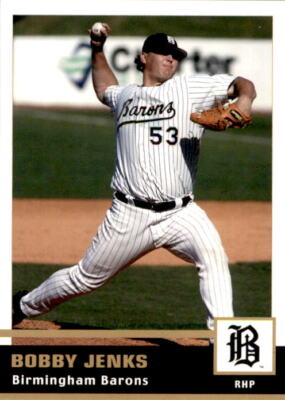
 2005 Birmingham Barons Grandstand #12 Bobby Jenks Bothell Washington WA  Card | eBay

BOBBY JENKS

   The affable reliever who won a World Series with the White Sox was a familiar face in the Southern League, first on the way up in 2005 while with the Birmingham Barons, the same season he would join White Sox postseason legends as the Chicago closer in the fall classic. Bobby Jenks was again in Barons togs in 2008 when he made a rehab appearance, taking the hill in Montgomery against the Biscuits. Talking with Jenks was a pleasure, the babyfaced hurler emanated an aura of joy and youthful excitement, he will be missed by many.

ED MICKELSON

   Ed Mickelson's Major League career spanned three seasons, but included just eighteen game appearances that culminated in 1957 with the Chicago Cubs. Among his most notable achievements was driving the St. Louis Browns franchise final run in 1953. However, he was a prolific minor league hitter and first baseman. While with Montgomery in 1950, Ed had a phenomenal season, posting a .417 average with 21 homeruns and 102 runs batted in. It was such a strong showing that Mickelson was promoted to the St. Louis Cardinals where he made his MLB debut.

  Ed Mickelson chronicled his baseball adventures in the autobiographical book, "Out of the Park: Memoir of a Minor League Baseball Star" which I found to be a wonderful read.


HOSKEN POWELL 

   Outfielder Hosken Powell, a Selma native, is perhaps the least recognized name among the three recent passings, but likely had the longest MLB career among them. With four full seasons in Minnesota and two years in Toronto, Powell played in nearly 600 big league games, batting .259 with 17 home runs and 43 stolen bases in his career. 

A first round draft pick by Pittsburgh in January of 1975, he stayed in college at Chipola for another six months until drafted by Minnesota, again in the first round of the June '75 draft (3rd overall). 

Hosken boasted a strong batting average in rookie and A-ball, earning a promotion to triple-A Tacoma in 1977. Powell had no trouble with minor league pitching, batting a robust .326 with sixteen stolen bases. Hoskens made his MLB debut in '78, but found big league hurlers a challenge, batting just .247 as the Twins regular right fielder. Powell's second season was perhaps his best, with career highs in average (.293), doubles (13) and runs batted in (36).

Powell spent two more seasons in the Twins outfield, playing in over four hundred games with Minnesota before being traded to Toronto for Greg Wells in December of 1981. With the Blue Jays, Hosken Powell was the Jays fourth outfielder but got into over a hundred games, batting .275 with three homers and four steals. 1983 was Powell's final MLB season, playing in just forty games before being released. Hosken spent a season with the Brewer's triple-A team and then signed with Saltillo in Mexico for one year. Powell scouted for a time after his playing days, then retired to hunting, fishing and enjoying his family. 


 Learning to Be a Caregiver to History

 I didn't set out to specialize in baseball history, but I found my local stories were mostly orphaned. When I wanted to know about baseball, there was no answer. Other cities have their totals and dates recorded, losing that information seems nearly criminal to me.

I recognize that a large part of the history I look after does not fully belong to me, requiring much respect and careful handling. These people were family to some, teammates to others, community members and sometimes unheralded stars. Some were also occasionally, or even habitually, involved in questionable situations or events, yet stories of their adventures sometimes distort the character of the individuals. I try to be cautious in how people are portrayed in my work, I try to consider how that person would react to hearing their story as I have told it, and also how their family might react to learning new details about their relations life.

I find being authentic and without judgement the best path, lay out the events and individuals involved and the reader can make their own appraisal on the merits of any certain person, subject or event.

That being said, there were a few folks in my recent studies that I was actively pulling against. Specifically speaking, racists. They stick out badly in society, they can't stay quiet about their opinions, their actions are hateful and often dangerous to everyone around them. Thankfully, describing their activities is usually enough to reveal their nature without the need for applying any labels.

Researching ballplayers is an adventure that develops over time, sometimes hours or days but often weeks or years. One aspect of my study took me deep into old time players and city history, as is often the case. Along the way, an event occurs and a name pops up of another person involved. It was a painful discovery, as I expanded my searching to include this new name, it became obvious they were a flat out rotten person. I did my best, but I am sure longtime readers will notice my lack of tolerance for that. As an author I was unable to resist including their comeuppance in the retelling, which I found truly sweet. And I hope you do too.

Another individual I found hard to stomach was, for a time, a Montgomery sportswriter in the old days. This respected newsman became a prominent mover in the baseball scene in the South, familiar at the time to most newspaper readers but now known mostly among baseball history researchers. I had encountered his name in previous deep dives into local baseball lore, but every time I come across his work it is difficult to interpret due to his racial bias. When a "newsman" won't print stories on Black teams, how do we take his word for it when he says so-and-so is the best player he has seen? Well, we don't. Pass the salt, I need a few grains.


The history portion of this post is a video of author Bill Plott speaking at last summers baseball conference. The leading authority on the Negro Southern League, Bill was also a Montgomery Advertiser reporter for decades and has a unique insight on the history of baseball in central Alabama, particularly pertaining to the Negro Leagues.